- This event has passed.
Re-Establishing Routines: Supporting a Return to In-Person Attendance


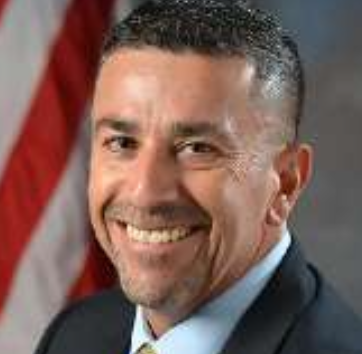
Drawing from the reopening experience of districts and communities, this webinar discussed strategies for partnering with teachers and families to support the return to in-person schooling. Hedy Chang, Executive Director of Attendance Works, moderated the session. Joining her as presenters were Superintendent Erica Forti of East Haven Public Schools, East Haven, Connecticut; Superintendent David K. Moore, Ed.D., School District of Indian River County, Vero Beach, Florida; Gloria Corral, President and CEO of Parent Institute for Quality Education (PIQE); and Superintendent Martín Macías of Golden Plains Unified School District in San Joaquin, California.
Hedy Chang opened the session by identifying anticipated challenges facing young children and their families as they prepare to return to an in-person school setting and citing research on the adverse impact of missing school in the early grades. Drawing on mid-year SY 2020–21 data from the state of Connecticut, Chang said that “[these trends] suggest that we are going to see dramatically increased chronic absence numbers, particularly in those communities hardest hit by the pandemic.” She closed her remarks by sharing the underlying positive conditions for learning that lead to school attendance for young learners and that need to be considered and in place as schools reopen.
Participants first heard from superintendents in two school districts that have provided in-person learning in the 2020–21 school year. Superintendent Erica Forti offered several ways that East Haven Public Schools has supported students to regularly attend school, with a focus on utilizing multiple communication avenues with parents and families, using attendance data as a touchpoint with individual households to set and celebrate attendance goals for their child, and listening closely to the needs of parents, teachers, staff and principals. She reflected, “We were challenged with rethinking what it means to attend school,” and added, “[These] changes have resulted in great work, deeper relationships and a keener understanding of the types of supports our students and families need.”
David K. Moore, who began his term as Superintendent of the School District of Indian River County two months before the pandemic, echoed Forti’s emphasis on openness and transparency, constant communication and systems for tracking attendance. He then focused on the value of empowering problem-solving at the school-site level by sharing data with principals in a format that they can manipulate, analyze, deeply understand and disaggregate in order to make ties between academic performance in the classroom and at an instructional-model level. He commented on the importance of using data “ultimately as our superpower, not just to define problems, but to solve problems.”
The second set of speakers focused on the experience of places that are now just preparing to return to an in-person school setting. Gloria Corral shared insights from the immigrant, low-income and English-language learner families served by PIQE. Stressing the importance of developing trusting and asset-based relationships with families, she cited three concerns from families in preparing for in-person learning: 1) health and safety for themselves and their children, especially given the personal loss of loved ones due to COVID; 2) logistics, including before- and after-school care, and 3) relationships, including developing new connections with teachers. Corral emphasized the importance of deliberately linking support to parents with the reality in which these families live and the trauma of the pandemic, “never forgetting that what parents want is what’s best for their children and their children’s learning.”
Superintendent Martín Macías shared how Golden Plains Unified School District addressed significant internet access issues in a geographically broad, rural county. He reflected, “Not only did we not have connectivity, but rural outliers [with cell coverage] had a challenge to connect even from the areas where they live.” He echoed themes of the importance of communication through a variety of channels (including platforms to translate communications between parents and teachers), leveraging and listening to staff on the best ways to support families, and opportunities for teachers to connect directly one-on-one with families. He also stressed the importance of integrating what teachers know and what is familiar to parents and drawing upon the shared value of making sure children are learning to read.
Panelists closed the session by answering participant questions and reflecting on how districts should use new funds available from the federal government through the American Rescue Plan to support attendance in in-person classes and address the needs of young learners.
If you were able to attend the session, we would love to hear your feedback! We appreciate your help in filling out the following form as we seek to learn and understand the perspectives, ideas, critiques and recommendations that better inform our key audiences.
Panel