- This event has passed.
Education Savings Accounts: High Expectations & Continuing Concerns

In this discussion, we built on a session from 2023: Opportunities and Potential Pitfalls: State Expansion of Education Savings Accounts and again created a forum for thoughtful and nuanced conversations to go beyond the headlines on a controversial policy. As this policy has expanded across multiple states — growing from 13 to 19 states since CGLR hosted the 2023 session — we wanted to explore this issue through a balanced discussion that “detoxifies” conversations about parent choice to get to a place where we understand the background, motivations, language, possibilities, and concerns.
What many are now calling “Education Savings Accounts” references the policy where states are giving families access to public per-pupil funds that can be used to pay for tuition to private schools, homeschooling supplies, curriculum materials, online learning, tutoring support, etc. Proponents of school choice see this as a necessary way to allow students to learn in the setting that works best for them, and skeptics see it as a disinvestment in public school systems at a time when they need as much support as possible. In this session, I moderated a conversation with a powerhouse panel who helped to define the various terms and variants of this policy while exploring the expansion of state policies and the history and evolution of this particular approach to parent choice. We also discussed the pros and cons and zeroed-in on parents’ views and why choice is important to them.
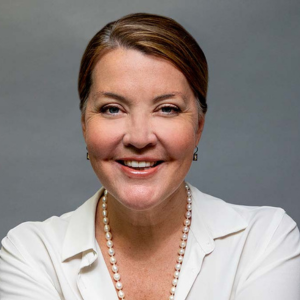
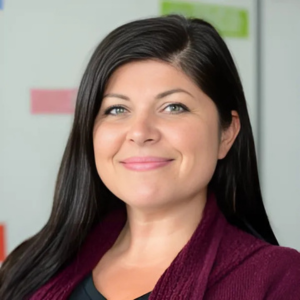
Ben DeGrow of ExcelinEd provided an overview of where we are today with various state policies. Luis Huerta, Ph.D., of Columbia Teachers College reviewed the history and how we got to where we are today. Beth Lewis of Save Our Schools Arizona articulated several of the challenges of the expanded funding for per-pupil accounts in Arizona, including the severe under-funding of public schools that has led some to close. Derrell Bradford of 50CAN spoke to the way these public funds can help to provide the same level of choice to low-income families that wealthier families have always had by moving to geographies with better schools. Colleen Dippel of Families Empowered in Texas explained how her organization has helped parents navigate and take advantage of the opportunities offered in Texas. Mike Goldstein of the Pioneer Institute described parent experiences that illuminated some of the ways parents have used the available public education resources to enhance their children’s learning experience.
Through the discussion, we explored some of the different perspectives — the possibilities and concerns about public per-pupil funding. The following quotes from two of our speakers help to illustrate the different perspectives on this issue that make it so contentious:
“Ninety-two percent of our families are choosing public district and charter schools that have accountability to the public. We are sending 12 percent of our state budget to this ESA voucher program for only 6 percent of our kids. The vast majority of these kids are kids who were already in private school. They were already [being educated at home]. In Arizona, the reality is people are sticking with their public school, but the other reality is that our public schools are shutting down because of the voucher program, because we are a revenue poor state! There is not enough funding for both of these and that’s true. The data all shows that the vouchers are primarily going to wealthier families in wealthier ZIP codes.”
–Beth Lewis, Save Our Schools Arizona
___________________________
“Parents are our core customers, so we connect them to religious and non-religious schools, and then, certainly, for parents who want to homeschool, we make sure that they have information that is accurate and actionable.…We’re providing direct service day in, day out to connect families to schools and schools to families. Last year, we made about 37,000 individual phone calls. So we’re very supportive of all forms of school choice. We think it’s really important to ensure that parents have a neutral service that is not incentivized by one sector over the other. So there ought to be a parent service that is just about helping parents get kids into ESA programs or getting kids into charter school programs or magnet school programs and the individual schools [or whatever educational option they prefer].”
–Colleen Dippel, Families Empowered
Parent voice, parent leadership, and parent choice have always been central to CGLR’s strategy for increasing student learning and achievement. The policies that are being pursued under the banner of parent choice are complicated, and their implications are as yet uncertain. This week we started to explore this terrain in more detail, and we will continue to do so in the coming months. We hope that you’ll come with us on this learning journey.
If you were able to attend the session, we would love to hear your feedback! We appreciate your help in filling out the following form as we seek to learn and understand the perspectives, ideas, critiques and recommendations that better inform our key audiences.
Panel





Details
- Date:
- May 20, 2025
- Time:
-
3:00 pm - 4:30 pm
- Event Category:
- Past Event