- This event has passed.
Holiday Rebroadcast: Screens in the First Five Years: What We Need to Know and Do
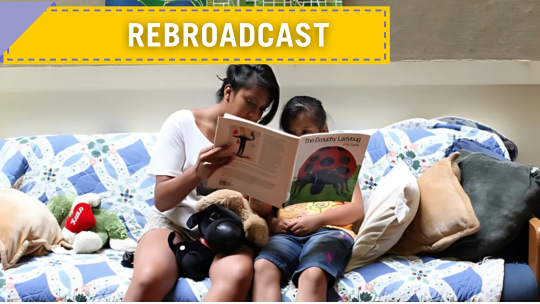
This December 29, 2025 holiday rebroadcast, co-sponsored by Children and Screens: Institute of Digital Media and Child Development, sought to offer research-backed, practical strategies to help families and those who support them make informed choices about technology use for infants and toddlers. The conversation was moderated by Kris Perry, MSW, of Children and Screens who began the webinar by grounding the discussion in the latest science. Dimitri Christakis, MD, MPH, also with Children and Screens, emphasized that “research has found that there are really no demonstrable benefits to screen use before the age of 18 months. And in fact, very strong suggestions that there’s harm associated with early screen use for children that young.” Yet he also noted that ages 2 to 5 represent “the sweet spot of media research,” where high-quality programming can foster both cognitive and social-emotional growth. Rachel Barr, Ph.D., of Georgetown University added, “High quality content has really long-lasting positive benefits,” particularly for children from low-resourced homes, who stand to benefit the most. Together, these insights highlighted the importance of distinguishing between harmful overexposure and intentional, developmentally appropriate use.
The panelists then turned to the real-world challenges families face in navigating a crowded and often misleading marketplace of apps and media. Kathy Hirsh-Pasek, Ph.D., of Temple University and the Brookings Institution shared findings from her research: “We did a study of the hundred most downloaded apps and…how many of them had real educational value? Well, I’ll give you the answer. It was two.” Rachel Franz, M.Ed., of Fairplay shared poll data indicating that the majority of families with children under age 6 “believed that screen time was essential or necessary for their child’s learning and development. This included parents of infants who don’t need screen time. And we were concerned by that because there really isn’t evidence that supports that claim that it’s necessary or better than learning with other humans.” Meanwhile, Barr pointed to video chat as a powerful example of technology that supports relationships, noting that during the pandemic, “grandparents who engaged in lots of activities…felt closer to their grandchildren.” These examples underscored that the benefits of screens depend not only on content but also on context, co-engagement, and the preservation of human connection.
Looking ahead, the panelists called for clear principles to guide families, educators, and policymakers, including highlighting Children and Screens Guide for Early Child Development and Media Use. Christakis reminded participants that “young children need laps, not apps,” emphasizing that technology should never displace essential caregiver interaction. Hirsh-Pasek cautioned against premature adoption of advanced tools, stating, “with our youngest children, those 3 and under, the answer is an unqualified no” when it comes to AI-enabled toys. Michelle Kang of National Association for the Education of Young Children (NAEYC), reinforced the field’s commitment to developmentally appropriate practice, affirming that “technology cannot be a substitute for the loving and nurturing and responsive relationship that an adult has with a child in an early learning environment. It can’t.”
Panel






Details
- Date:
- December 30, 2025
- Time:
-
3:00 pm - 4:30 pm
- Event Categories:
- Partner Webinar, Past Event