- This event has passed.
Holiday Rebroadcast: Beyond Decoding NAEP: The Federal Role in Promoting Efficacy, Equity, and Accountability

This January 6, 2026 session rebroadcast the final session of our “Decoding NAEP” series from 2025 that engaged state chiefs, educators, parents, researchers, and advocates in a deep-dive exploration of the 2024 scores from the National Assessment of Educational Progress — often called “The Nation’s Report Card.”
In this session, panelists went beyond decoding the 2024 NAEP scores to explore the federal role in generating data to assess student progress. We also talked about the will needed from local, state, and national leaders to regain a focus on the importance of student outcomes. Panelists discussed why the U.S. Department of Education and its Institute of Education Sciences should continue to provide funding and support for research that reveals what is needed and what works for various student demographics.
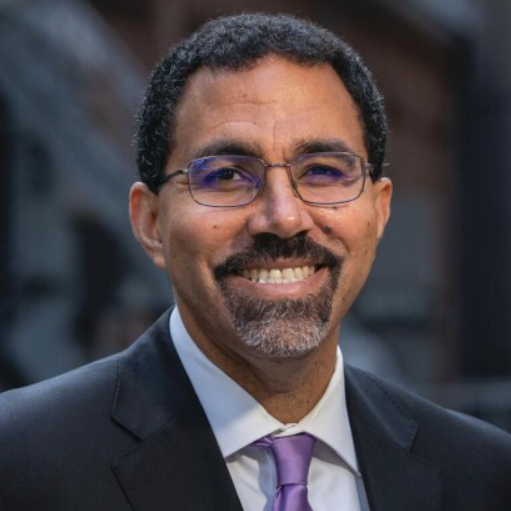
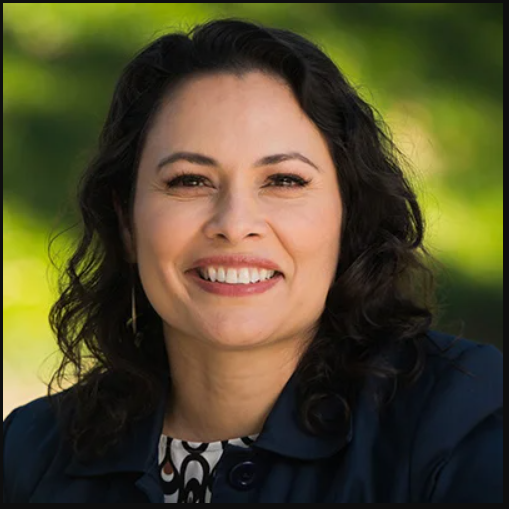
The session began with a conversation between two former U.S. Secretaries of Education, representing both sides of the aisle, about the importance of federal leadership being committed to student outcomes. John King, Jr., J.D., Ed.D., Chancellor of the State University of New York (SUNY) and U.S. Secretary of Education under President Obama from 2015–2017, and Margaret Spellings, President and CEO of the Bipartisan Policy Center and U.S. Secretary of Education under President Bush from 2005–2009, discussed the importance of using data to drive action, with Spellings noting:
When we focus on every kid and we measure — yes, that’s testing — and report that data, hold it up, learn from it, and make it a central part of what we invest in, we go in the right direction.
King emphasized the connection between educational outcomes and a strong workforce and the importance of federal leaders making this a priority:
And at the end of the day, for every employer, they will not have the workforce we need if we do not provide students with the foundational skills, particularly in English and math, although obviously students need much more than that. But if they don’t have those things, they surely aren’t going to be successful in the workforce….Today we really need our leadership to step up and restore the sense that improving educational outcomes is a national imperative.
The robust conversation on the federal role in promoting efficacy and accountability contiued as three prominent research and education leaders offered perspectives from both sides of the aisle. Michael J. Petrilli of the Thomas B. Fordham Institute, Adam Gamoran, Ph.D., of the William T. Grant Foundation, and Ruth N. Lopez Turley, Ph.D., of the Kinder Institute for Urban Research at Rice University and former member of the National Board for Education Sciences (2022–2025) began by reacting to what the former Secretaries shared. They also emphasized the importance of national research and data to identify and address inequities that impede student progress. Turley explained how federal data is used at the local level in her home community of Houston, Texas:
We were using national-level data from the School Finance Indicators Database, which uses the U.S. Department of Education’s National Center for Education Statistics (NCES) data, Census data, etc., to develop estimates for how much per-pupil funding is needed for each school district across the country. So we found that most school districts in the state of Texas are underfunded in terms of what they would need to achieve national average test scores. But even more importantly, we found that there are some school districts that were severely underfunded relative to others, both in the region and in the state. And so there are huge inequities that we need to pay attention to [and the federal data is needed to identify these inequities].
After the initial broadcast of this session in September 2025, CGLR produced, The Nation’s Report Card: A Call to Action for Raising Achievement and Closing Gaps, a report that synthesizes insights from across the nine Decoding NAEP sessions. Rather than declaring definitive conclusions, this new report aims to broaden and deepen the national conversation about how to improve student outcomes ― especially for children growing up in economically challenged households. Featuring quotes and reflections from the 50 panelists who participated in the series, the report invites researchers, policymakers, practitioners, and advocates to treat NAEP as a catalyst for learning and problem-solving. CGLR plans to continue the conversation about NAEP in 2026, leveraging this report to spark bold, sustained action and engage an even wider community in shaping effective strategies to boost early school success. We hope you will join that conversation with us on LinkedIn, sharing your insights and reflections on how strong data and sustained commitment can fuel progress and narrow gaps. Join us.
Panel




Details
- Date:
- January 6
- Time:
-
3:00 pm - 4:30 pm
- Event Category:
- Past Event