- This event has passed.
Early Relational Health: The Cornerstone and Common Thread
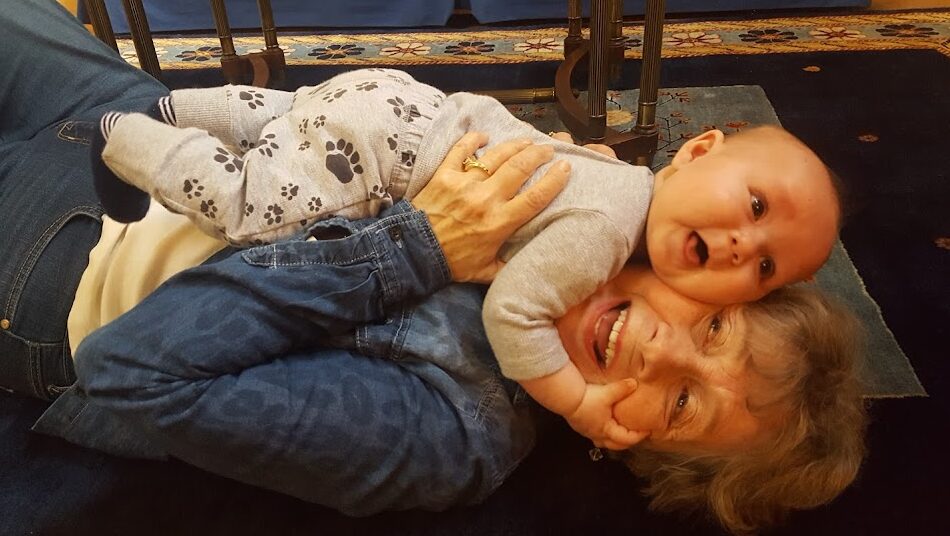
The relationship between early childhood policy experts and housing experts can absolutely help a community better thrive if we center the experience of young children and their families.
–Mayra Alvarez, MHA, The Children’s Partnership
In this CGLR Peer Exchange session, Campaign for Grade-Level Reading’s Managing Director Ralph Smith opened the conversation by recognizing the public housing leaders in the audience. With the explicit mission to disrupt generational poverty, CGLR continues to acknowledge, attend to, and work with the children and families served by the nation’s public housing agencies.
Public housing communities bring many advantages that CGLR has come to understand as “hidden in plain sight.” Public housing communities are inherently two generation and allow us to work with and learn from families who are not currently housing insecure. Smith suggested that “our challenge in this moment is to develop a common language frame to support a set of ideas that are sufficiently coherent and powerful enough to mobilize partners and stakeholders in early school success. We believe the promise of that frame is represented by early relational health.”
In this session, David Willis, MD, FAAP, of Nurture Connection at Georgetown University provided an overview of early relational health, defining it as the state of emotional well-being that grows from the positive emotional connection between babies and toddlers and their parents/caregivers supported by strong, positive, and nurturing experiences.
An early relational health ecosystem is one that authentically engages families and communities, collaborates with cross-sector leaders, builds leadership capacity, uses data, reduces racial inequities, and measures impact to continuously improve. Willis sees housing as a platform to help advance flourishing. By pairing stable housing with neighborhood improvements, income supports, and relational strengthening strategies, families and communities are better positioned to promote early relational health.
Miriam Westheimer, Ed.D., of HIPPY International talked about the role of evidence-based home visiting programs and how they strengthen early relational health. Evidence-based home visiting programs are family support models proven through rigorous research to improve outcomes for young children and their parents. Trained home visitors meet with families, often starting during pregnancy or shortly after birth to coach parents, share child development activities, and connect parents to community resources. These evidence-based programs have demonstrated measurable impacts such as improved early learning, stronger parent engagement, reduced child maltreatment, and better long-term outcomes for children.
Home Instruction for Parents of Preschool Youngsters (HIPPY) provides structured activities and guidance that promote school readiness and give parents the confidence to see themselves as their child’s first teacher. “At its heart, home visiting is about building connections between parent and child, strengthening the bonds that fuel early learning, and making connections between families and resources,” said Westheimer.
Ron Ferguson, Ph.D., of The Basics Inc. shared that The Basics is a spin-off of the Achievement Gap Initiative at Harvard. The Basics initiative aligns with relational health by helping change agents in communities, regions, and states build their capacity for supporting parents and other caregivers in promoting children’s cognitive and social-emotional development for kindergarten readiness. Rooted in five principles: 1) maximize love and manage stress; 2) talk, sing, and point; 3) count, group, and compare; 4) explore through movement and play; and 5) read and discuss stories, The Basics focuses on everyday activities that children experience from birth to age 5 and beyond. Ferguson hopes to “saturate the parent social ecology with information and encouragement and reminders to make what we call The Basics Principles everyday experiences for children.” He sees public housing as part of an ecosystem situated to play a vital role in early relational health.
Mayra Alvarez, MHA, of The Children’s Partnership, an advocacy organization in California focused on advancing child health equity, described a core belief of the organization this way: “A child is a child. It doesn’t matter that child’s background, it doesn’t matter that child’s language of origin, their economic status — all children are our children. If we approach taking care of our children from that perspective, it changes what our policy priorities are going to be.”
Alvarez grounded her remarks in the importance of housing being part of an early relational health ecosystem by providing a few statistics on California’s housing instability. In the state, 70,000 children under age 3 are unhoused. Only 1 in 6 infants and toddlers who are experiencing homelessness are enrolled in an early learning program. Of children age 0 to 2, 27% live in crowded housing. The negative implications of housing insecurity for both parents and children can’t be overstated. According to Alvarez, “The relationship between early childhood policy experts and housing experts can absolutely help a community better thrive if we center the experience of young children and their families.”
We invite you to register and make plans to join CGLR again on October 28 when David Willis will return with others to present the newly released report from the National Academies of Science, Engineering, and Medicine: Early Relational Health: Building Foundations for Child, Family, and Community Well-being.
If you were able to attend the session, we would love to hear your feedback! We appreciate your help in filling out the following form as we seek to learn and understand the perspectives, ideas, critiques and recommendations that better inform our key audiences.
Panel


Details
- Date:
- September 30, 2025
- Time:
-
12:30 pm - 2:00 pm
- Event Category:
- Past Event