- This event has passed.
What Works: Observational Assessment in the Early Grades (Part 1 of 2)
November 10, 2026
What Works: Observational Assessment in the Early Grades (Part 1 of 2)
This webinar, the first in a two-part conversation, explored why observation matters for early literacy and what makes it work. Moderated by Barb Stratman, M.S., of the Buffett Early Childhood Institute at the University of Nebraska, the session featured Amreena Hussain, M.A., of EdBetter; Molly DePasquale of AstroTelos, LLC; Jie-Qi Chen, Ph.D., of Teach Plus and Erikson Institute; Christina Grant, Ed.D., of the Center for Education Policy Research at Harvard University; Amanda DeBell of the New Mexico Public Education Department; and Pam Kastner, Ed.D., of Mount St. Joseph University.
“Classroom observation tells us whether the teaching looks right, but the student observation tells us whether it’s working.”
— Christina Grant, Ed.D., Center for Education Policy Research, Harvard University
Two lenses, one moment
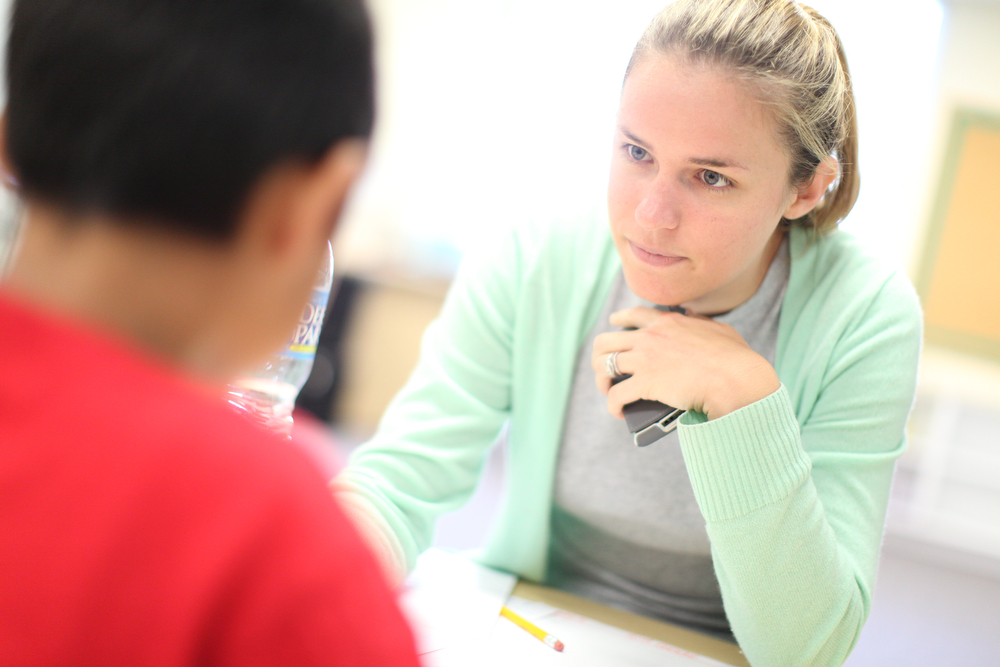
Barb Stratman opened by stepping into a kindergarten classroom where children helped a puppet pack for a rhyming picnic. Through the lens of classroom observation, she noticed the teacher’s instructional choices: how she engaged every child, built on one child’s answer, and gave children time to think. Through the lens of student observational assessment, she noticed what each child’s response revealed about their understanding of rhyme. Even among colleagues planning the session, she noted, the two lenses could be hard to separate. She invited the audience to keep two questions in mind: What are we trying to learn, and how will we use what we notice?
Classroom observation as instructional feedback
Amreena Hussain grounded the conversation in the instructional core, noting that the quality of teaching has the strongest effect on student learning, and that observation and coaching are among the most powerful ways to improve it. Drawing on tens of thousands of classroom observations in EdBetter districts, she shared that strong lesson and unit internalization lifts every other indicator. “Preparation is king,” she said. Differentiating for students who need the most support, such as emergent bilingual students and students with dyslexia, was consistently the hardest area for teachers.
Fewer tools, clearer questions
Molly DePasquale described a common barrier: too many observation tools. A single school might use six different instruments to observe one teacher, often with overlapping purposes and little focus on evidence-based literacy practices. Principals frequently shoulder the burden of collecting and reporting it all, leaving little time to act. She and Hussain shared a simple process to streamline: Define the questions you need observation data to answer, inventory existing tools, and decide what to keep, cut, and modify, with a cross-functional team at the table.
Observation becomes assessment when we act on it
Jie-Qi Chen turned to the student lens. “We don’t teach curriculum. We teach children,” she said. What turns everyday observation into assessment is what teachers notice, how they interpret it, and what they do next. Through Thinking in Action, kindergarten teachers use simple routines like the Notice and Wonder Photo Chat that support children’s learning while giving teachers rich evidence of their oral language and thinking, making observation part of teaching rather than an added task.
“Observation becomes assessment when we purposefully interpret what we see. And assessment becomes formative when we use that understanding to guide instruction.”
— Jie-Qi Chen, Ph.D., Teach Plus and Erikson Institute
Listening to children read
Pam Kastner, a kindergarten teacher for 18 years, noted that universal screeners tell us who is at risk, but not why. Listening to children read reveals whether they’re reading accurately, automatically, and with meaning, and what they do when they get stuck. She modeled how a teacher’s professional knowledge shapes in-the-moment error correction, adding that observation “is only as valuable as the actions that we take.”
Building a culture of feedback
Panelists agreed that the two lenses work best in tandem, and that trust is essential. Grant called for bite-sized, timely feedback that builds teachers’ capacity, rather than infrequent, high-stakes observations. Amanda DeBell shared that about half of New Mexico’s teachers now come from alternative licensure programs, and that high-quality instructional materials and regular coaching cycles can help build their professional judgment. “That is the principal’s job, is to be in classrooms,” she said. Kastner encouraged schools to break down teacher isolation through peer observation and shared a low-tech tool from her own classroom: a manila folder with a sticky note for each child to capture observations and spot patterns. Stratman added that preK teachers are “masters of observation” and a valuable resource for colleagues in the early grades.
Looking ahead
Panelists previewed questions about newer approaches, including AI-enabled tools. Grant noted that families want to know where a child’s recorded voice goes, how it’s used, and when it’s destroyed. She urged districts to ask whether a tool measures what matters, helps teachers act faster, protects children’s data, has evidence of impact, and serves every student, including multilingual learners and students with disabilities. DeBell emphasized protecting students’ personally identifiable information, and Kastner encouraged districts to bring families in as partners from the beginning.
In a lightning round to close the session, each panelist completed the sentence, “Observation helps more children read proficiently by third grade…” When it leads to informed action. When we notice what children can do, understand what they need next, and adjust instruction accordingly. When we do so we can intervene earlier, teach more effectively, and ensure every child is literate.
— Pam Kastner, Ed.D., Mount Saint Joseph University in the Reading Science Doctoral Program
Panel


Details